



NJ: How did you first discover Exit 8 the game?
GK: I am a big gamer and I love indie games. As soon as the game came out, I played it almost immediately. And while I was doing that, I also watched a lot of livestreams of the game. And it dawned on me that there were as many stories and as many interactions with this game as there were players. So, I felt that because it was so simple it almost served as this device to kind of reflect human nature back at us. And it felt like a purgatory-like space.
NJ: When you played the game yourself, what did you most enjoy about the experience?
GK: I really enjoyed the super simple design of the game itself, even down to the visual expression. We're in this white, sanitized space and it keeps looping, yet it feels very scary. So, I thought it was an interesting combination of emotion. And it really again reminded me of Dante's Divine Comedy and this idea of purgatory being trapped in it. So, I think that that creepiness is what really attracted me to the game.
NJ: You mentioned that you watched a lot of livestreams of people playing the games. Is that when you first had the idea that it would make a good film, or did you decide that later?
GK: While I was watching streams, I was reminded of the time I was able to speak to Nintendo's Miyamoto Shigeru about 10 years ago on a panel. And he had said really great games entertain not just the players, but also the people watching the player and watching the player's screen. So, that's when I thought to myself, well right now in the video game landscape and environment, there are players of the games and there are streamers, and people who watch the streams. So, I thought if there was some way to capture that phenomenon and translate it into a movie, it would make for a very unique experience.
NJ: The game itself is experiential and devoid of narrative. How did you develop a story that fit with the game experience? You mentioned Dante as an influence, but was there anything else that provided inspiration for the film's story?
GK: A lot of it came from my own daily life. Just taking the subway system in Tokyo, I'll see everyone on the train on their smartphones and so invested into their own world that they don't even notice a crying baby on the train. Likewise, within the smartphones, people are scrolling through on their timeline, different instances of war, of violence, and on some level, pretend not to see. So, while no one on the train, I'm sure, is directly responsible for any killing, I think we're all guilty of looking and not seeing. So, I thought, well, what if that small sin was reflected back upon the people in this white corridor and shows up as anomalies that manifest themselves? And within that space, people have the choice to ignore it and continue moving on or notice it and turn back. I wanted to layer on top of itself the actions in our daily lives and the rules within the video game.
NJ: Were there any special challenges in trying to tell the story in such a way it could be appreciated by those who both enjoyed the game and perhaps others who don't play games at all?
GK: Well, in fact, this was the first video game source material adaptation that was an official selection at the Cannes Film Festival. And I think it was this objective critique of what was happening in the video game world and transforming that into a film that put us into the film festival circuit and enabled us to kind of overcome that boundary. And thankfully we screened at Cannes and festivals like Toronto.
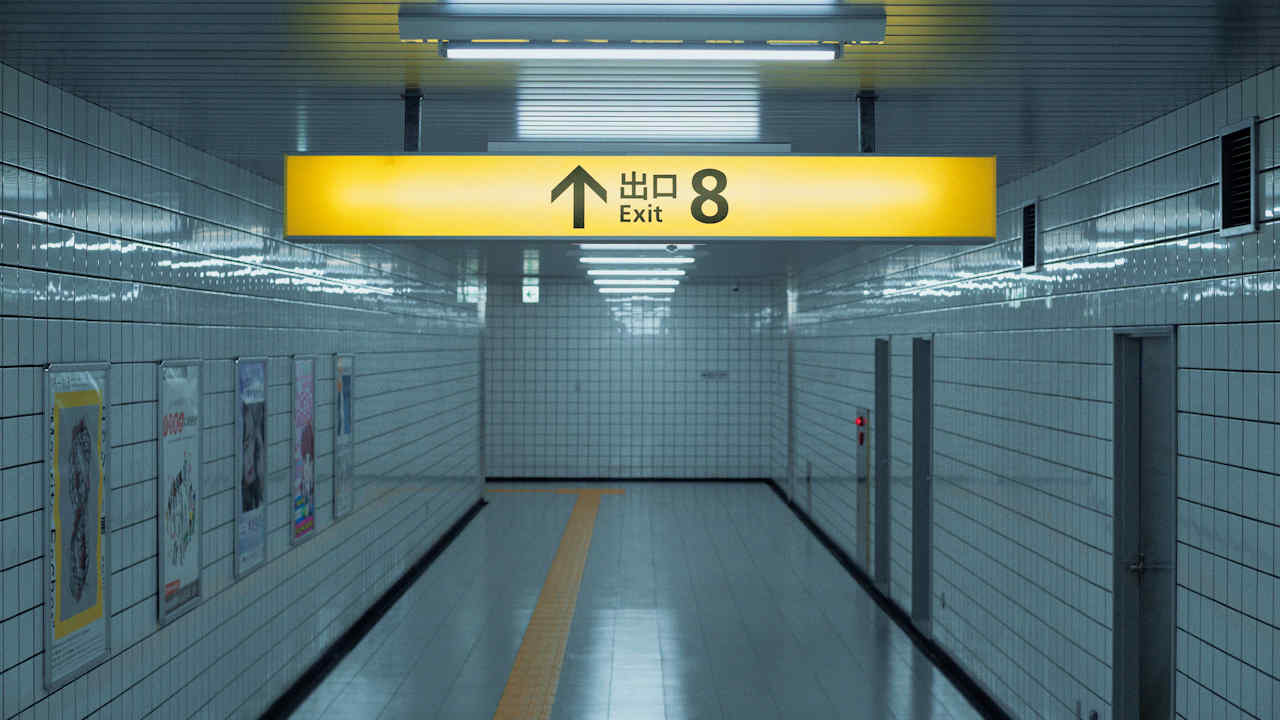
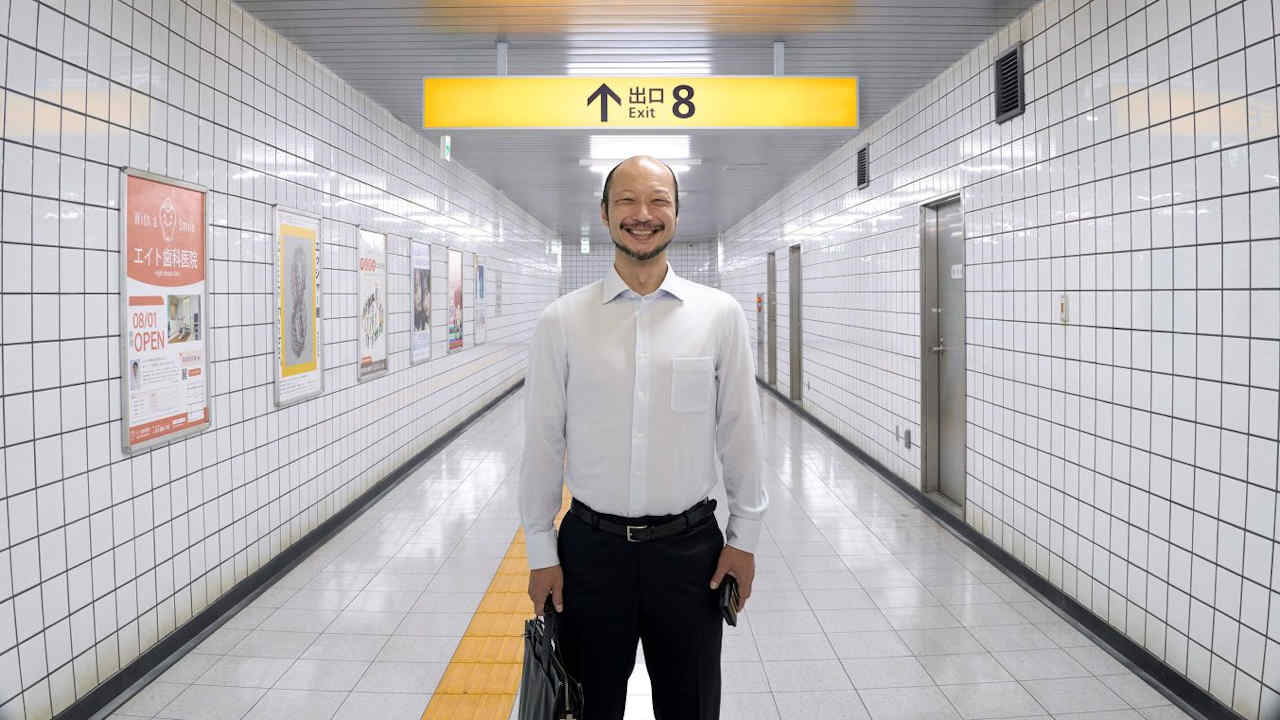
NJ: People who have played the game will appreciate how meticulously the subway hall was recreated for the film. However, there were some changes made, say the inclusion of the photo booth, some changes to the posters. What inspired you to make these subtle changes for the film?
GK: Well, the film was actually moved from the real subway to the set of the movie in one cut. The transition from an actual subway station into our set in a single shot was a huge challenge and was only able to be done by the crew's talent and effort.
With regards to once we go into the set, we actually have two identical corridors that we built. The first corridor is a copy and paste. With that copy and paste, that's how we were able to shoot that super long runner where the story loops physically.
To do that, the walking man, for example, after he walks past the camera the first time he hopped on a bike and then went back to the beginning of the first corridor, caught his breath and began walking down the corridor again in this very CG animation-like manner. The looping effect that you see in the film was actually done through practical filming and very analog methods.
For the production design of the set itself, I wanted it to look like it was rendered in some kind of game engine like Unreal Engine in terms of the visual expression. Between the way we designed the set and the way the actor and talent were performing on screen, I think it lands right in that uncanny valley, but intentionally so, giving it a very creepy feel.
 NJ: In the game, the Lost Man is both faceless and voiceless. What characteristics were you looking for in an actor when you cast the role?
GK: The characters in this movie are not named by anyone, but are drawn as NPC players. When I was on the subway, I thought I was the main character, but when I looked around, I was an NPC player. So, I wanted to draw each of the NPC players to have their own dramas.
Our lead, Ninomiya, is an avid gamer, so he had a very good understanding of what we're trying to do conceptually, which was blur the boundaries between the video game and movie mediums, and how we shot this on set I think kind of lends itself to that as well.
Where we'd shoot based on the screenplay, edit it and assemble it right away, and watch it together, our lead cast, Ninomiya included, would then rewrite any scenes that weren't working, and then reshoot it. So, the feedback loop was almost like being in a video game studio. It felt like we were debugging the film in real time, and Ninomiya was one of our first QA testers.
NJ: The film gives a story to the game, but it leaves that story open-ended and open to interpretation. What main themes in the film did you want to resonate with people as they leave the theater and start to think about the story and interpret how it ended for themselves?
GK: That's right. We're living in a very self-centered, selfish age right now, and everyone on their smartphones are so immersed and engrossed and invested in that world, they don't notice the instances of violence or wars that are happening around them, but these are anomalies, and every time we don't notice the anomaly and continue going on, we'll get stuck in this loop.
So, noticing the anomaly, acknowledging it, and turning around is something I hope people can take with them beyond the movie theater and perhaps change or shift the way they see everything in their daily lives even a little bit.
 NJ: If someone's a gamer but is completely new to Exit 8, would you recommend playing the game first or seeing the film first to them?
GK: Well since the film is releasing tomorrow, I would encourage people to go see the movie in theaters and then perhaps that'll be their touchpoint into the game. And in terms of timing, I think people could probably, air quote, clear the game quicker if they watch the movie than if they play the game themselves.
NJ: Are there any other games that you'd like to adapt the film? Platform 8, perhaps?
GK: I mean, if through some chance encounter, I'm able to meet this next video game, then absolutely. I think video games in some way kind of challenge the status quo and expand the possibilities of what movies can do. But for me right now, I think I'm still stuck in Exit 8.